If the idea of a golden digital age is not to be swept aside, the telecom sector will have to die.
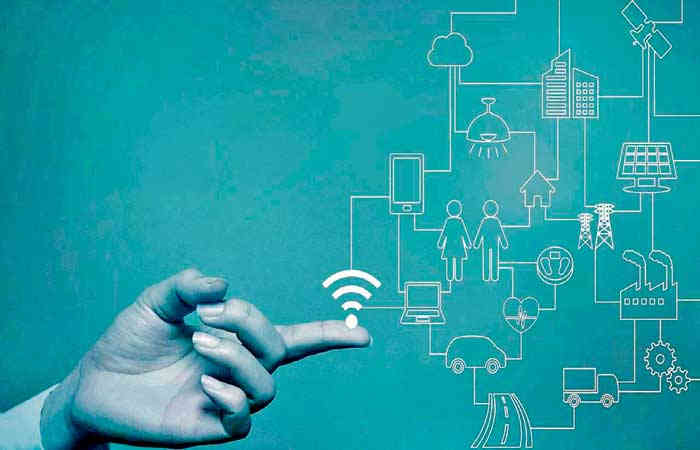
Today is the era of digital innovation. Its business is growing at a pace that cannot be imagined. Due to digitization, the traditional business model is gaining momentum and consumers are getting huge benefits. So the new business model is hitting the horizon. The world's largest taxi company does not own a single vehicle. On the other hand, YouTube does not have its own hourly content but is still the most popular media company in the world. Digitization is no longer a luxury but a basic necessity. Whether it is a person, a company or a country, to be compatible with the rapidly changing world, digitization is inevitable.
But the widespread use and penetration of the digital sector requires the mobile and telecom sectors. If the size of the economy of the country is to be one trillion, the area which is healthy is in the ICU today and one of the athlete companies is taking a breather. Earlier, the telecom sector was booming in the 5th and suddenly scandals erupted and foreign telecom companies disappeared. Vodafone, headquartered in Britain, is today in the same position as its Indian partner group. Aditya Birla. Now if for some reason Vodafone closes the shop, the dominance of the two companies in this area will be established. Which is going to be a matter of concern for the government and consumers alike.
Digital economy contributes 3 to 5 percent of China and the US GDP, while in India the figure is in single digits. In the last three years, internet consumption has increased so much that India has emerged as the largest market in the field of information and technology. But in terms of trade and volume, we are still lagging behind in terms of value. India is the second largest and fastest growing broad-band market in the world. There are 3 million high-speed broad band users in India. But even so, the facility has reached only 5% of the country's population. Currently every broadband user in the country consumes 5 gigabytes per month, we are number one in the world in terms of data consumption. Even Facebook, WhatsApp, and YouTube fans are sitting in Silicon Valley. But India is the largest market for Facebook (1 million 3, WhatsApp (1 million), YouTube (1 million)), and India is second in terms of smart phone sales.
India has made so much progress in the digital arena that digital consumers of digital, consumer, e-commerce, e-tech, mobile payment, food delivery, etc. have been attracted to India because of this. Global tech giant companies like Amazon, Alibaba, Apple, Google, Facebook, Walmart, Uber, Netflix, Softbank, Xiaomi and Microsoft have set up dhamas in India that connect Indian companies and start companies and provide high-paying jobs to Indian youth. The biggest benefit to consumers is this. And with the advent of F-G, the experience of customers will only change. 2 billion devices, sensors and machines will be connected with 2 Gbps speed. This will be a blessing for all verticals like transport, manufacturing, media, healthcare and education etc. The sector has an opportunity to attract investment of Rs 1 billion or Rs.
But whether it is Four-G or Fi-G, or digital, it is on the telecom or mobile sector. Which is currently going through very difficult circumstances. Government, companies, citizens and small enterprises are waiting when private operators launch Fi-G. Which will help to become a partner in the Fourth Industrial Revolution. If the idea of the era of the Gold Digital Economy is not to be overlooked, the important telecom sector will have to be restored. Only then will digital services operate and remain. Whether the issue is in the Supreme or before the government, issues including spectrum pricing, tax issues will have to be resolved.
The digital infrastructure ecosystem has three major stake holders. Customers, government and telecom operators. Two of these stock holders are Diwali. But at the expense of the third. The country's mobile consumers are among the lowest in the world due to the fatal competition of prices. The fun of mobile is robbed. Of course there is scope in the quality of service. Complaints of call drop and slow speed, but call and internet rates are so low that they operate, on the other hand, the government gets 5% tax on consumers' mobile and Internet bills. Moreover, the amount that the Government of India has charged from the spectrum in terms of prices is the highest in the world. But the third player in the digital infrastructure, mobile operators, has called out for Trahimam. Many domestic and foreign companies have fled the battlefield. So the condition of one of the three currently operating is so maroon that it is not certain whether the debt will blow. Its president has made it clear that he will no longer stop at Good Money Company.
It is true that the Supreme cannot be ignored, but now top political leaders should lean in and resolve the issue. India's reputation is globally high in the controversy. Although the public sector companies have not provided any services to the third party, they have demanded money through the AGR.
Comments
Post a Comment
What you think give us your idea about this article we publish your words on our site