According to a recent study in Canada, 5.5 percent of people do not go to the dentist for fear of pain. Confirming this, a dentist from Dardar says, 'First of all I use only one medicine for toothache. That is the conversation with them. When the children have to be called three or four times, first I just chat with him. I use but give them non-playable instruments to play with so that the fear gradually breaks. Indeed, it is more difficult to convince adults than children.'
However, this is not the fault of the patients either. In dental treatment, the doctor works on the living nerves and that too when the patient is fully conscious, i.e., in dental diseases, one should be afraid before going to the doctor, but at the same time, it is also a fact that seeing a person's teeth is another big thing. It is necessary to get the teeth checked every six months to detect the signs of diseases. There is no need to wait for pain to occur.
A heart attack
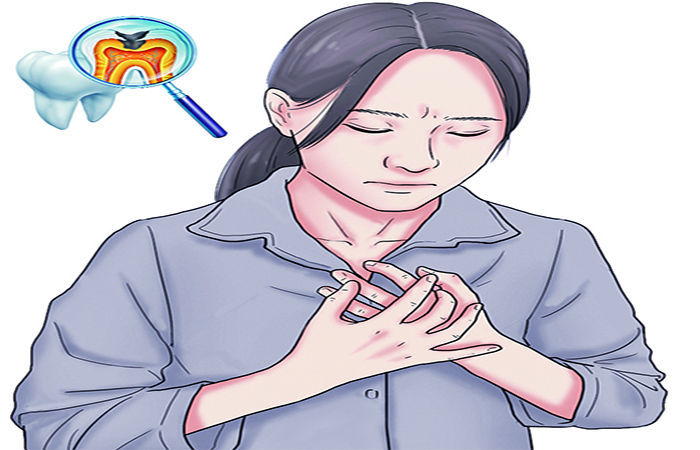
Researchers say that people with dental diseases are twice as likely to develop heart (coronary) diseases than the general population. Few visible links are available to measure the extent of heart disease and external health, such as how many teeth a person has lost? A plaque on the teeth called plaque in English is a plaque-test score etc.
Cardiologists often ask patients to undergo dental treatment before angiography or electrophysiogram etc. because dental diseases often affect your heart condition more. According to another study, there is also a link between dental diseases and heart attacks. Similarly, people with heart diseases are more likely to get dental infections.
Osteoporosis
Researchers have found a direct link between osteoporosis and jawbone erosion. Osteoporosis can cause tooth loss, as the gum bone density reduces the support for the teeth, resulting in tooth loss due to the weakening of the tooth base. In women, estrogen supplementation injections or pills are often given for up to five years after menopause. It reduces the impact of dental diseases on them. Researchers believe that after menopause, the lack of a chemical called estrogen and osteoporosis accelerates the process of bone wear in women, resulting in an increased risk of tooth loss, so if estrogen supplements are given to these women, they can reduce the effects of osteoporosis and protect teeth.
childbirth
Pregnant women should also take care of their teeth in addition to other care, because a woman with dental disease is seven times more likely to deliver a baby prematurely or have a low birth weight. Dental diseases increase the amount of a chemical in the body that causes labor pains to occur quickly. As a result, there is a risk of premature delivery, so if you are pregnant, you should not ignore the dentist.
Diabetes
Dental disease can lead to type 2 diabetes that cannot be controlled quickly, resulting in long-term high blood sugar levels. According to a survey conducted in 1993, when such patients were treated for dental disease, their diabetes was significantly reduced.
An American-only dental journal recently revealed a startling fact that most patients with dental disease are unaware of their disease. None of the dental patients he surveyed self-reported diabetes, although 15 patients tested positive for diabetes, while 56 percent of patients faced future risk of stroke and heart disease.
Diseases of the respiratory system
Scientists have discovered that if there are cavities (cavities) in the teeth, the germs generated in them reach the lungs through the mouth and spread the infection there. This can lead to lung diseases like pneumonia, which causes severe breathing problems.
Comments
Post a Comment
What you think give us your idea about this article we publish your words on our site