The mutual competition of private sector banks equals a danger bell for the country's financial sector
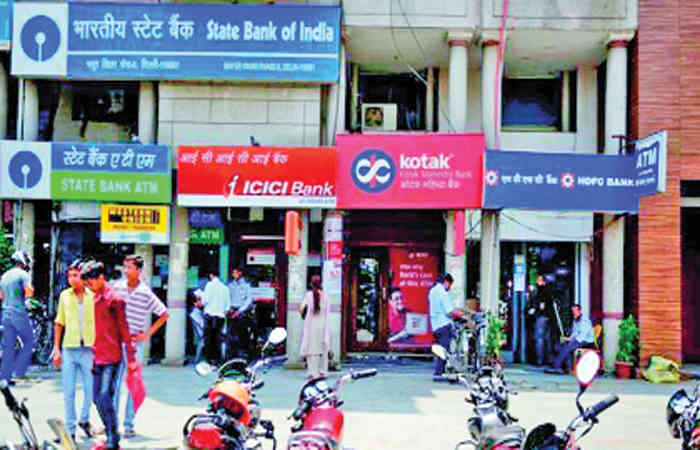
When the government and the Reserve Bank have failed to take action in the matter of Yes Bank, now sitting in it will shake people's confidence in any money laundering system.
To handle the crisis of Yes Bank, the Reserve Bank of India (RBI) exercised its powers under Article 1 of the Banking Regulation Act. Using power, the RBI superseded the board of Yes Bank, appointed an administrator, and adopted a strategy to take swift measures to maintain public confidence in the bank and in the overall financial system of the country, in which the government also supported the RBI. It is rare for a private bank to undertake such a comprehensive exercise by the Reserve Bank.
Earlier in the 5th, the private sector was forced to put Global Trust Bank Ltd. in a moratorium. However, at that time, the bank had merged with the public sector bank and prevented its spray from flying elsewhere. In the last three decades, the Reserve Bank has not let a single commercial bank fail. March is the last month of the financial year for companies. During this month, companies are active in cash management. In such a case, it is not possible to keep YES Bank in a long time in the Moratorium, as the Reserve Bank is well aware that YES Bank has been expedited to operate fully.
There has been a question as to why the government has taken so much delay in taking action against Yes Bank since its administration had raided it for the last two years. Rana Kapoor and his management who wanted to take action a long time ago have not been taken. The news coming out after the arrest of Rana Kapoor is very serious. That is, there are also clues from this chapter that private banks are not able to separate from political influence.
If a bank fails, the amount of insurance payout to the head bank's employees can be huge. Even before this, when several co-operative banks were financially under pressure, the Reserve Bank has been seen to adopt various approaches to protect the creditors. In many cases, the Reserve Bank has been extending the duration of such moratorium until such banks are frozen.
If such banks fail and they are taken into liquidation, every depositor of the bank may have the option of paying Rs one lakh from the deposit insurance and credit guarantee corporation of India, which has now been increased to Rs five lakh. Who may not be able to afford this corporation. Because the number of bank depositors is relatively large. Generally, this corporation is designed to reimburse money in case of a small bank breakdown, but in case of a major commercial bank collapse, it is beyond the power of the corporation to file claims.
Looking at the last annual report of the corporation, it appears that the total revenue of the corporation in FY'4 was Rs. 5 crore, of which Rs. 1 crore was generated by banks as insurance premiums and Rs. 1 crore through investment. After settlement of the claims and other expenses of Rs 5 crore, the corporation had a balance of Rs 5 crore at year's end. This balance of the corporation is taken to the Deposit Insurance Fund. Insurance is paid out of this fund to the holders of banks whose license is revoked. At the end of fiscal year 1, a total of Rs 5 crore was deposited.
Since its inception, the corporation has paid Rs 5 crore in insurance claim till now. Although all of this money has been paid in the context of failure of co-operative banks and other smaller banks, it has not yet been seen if the corporation has to pay the insurance amount due to the failure of a major bank like Yes Bank. It is understandable why the government does not allow the big banks to fail. If the government ventures to revoke the license of a major bank, it can affect not only the country's financial system but also the huge amount of money it can pay for insurance.
Given this fact, it is likely that the Reserve Bank and the Ministry of Finance are currently in action to resurrect Yes Bank. But in the midst of the current economic downturn, it will be interesting to see if the bank's revival and capitalization will prove practical for the RBI. The fourth largest private sector bank in the country will have to re-establish strong management on it, which will conduct a proper audit of the bank's book and closely monitor its performance.
An investigation into the management of the bank's previous management has been launched at present. However, the investigation will be long and what will eventually come in handy will be known in the future. The main responsibility of the Reserve Bank will be to see that its infectious impact does not have to affect other banks or financial institutions, as well as to the bank.
From the experience of Yes Bank, it can be said that the country needs an institutional framework and legal framework that in case of failure of a large financial company, it should do so in a way that the depositors' money can be fully protected and that the assets of the institution and the government are not destroyed.
When the government and the Reserve Bank have delayed taking action on the issue of Yes Bank, now sitting in it will shake the confidence of the people from any money laundering system. While the role of private sector banks and financial institutions is increasing in comparison to the public sector banks in the country and is likely to go further, it would not be wrong to say that the time has come for the government and the Reserve Bank to become more aware as a Director.
Comments
Post a Comment
What you think give us your idea about this article we publish your words on our site